
SEAGULL HEALTH
Your health,We care!
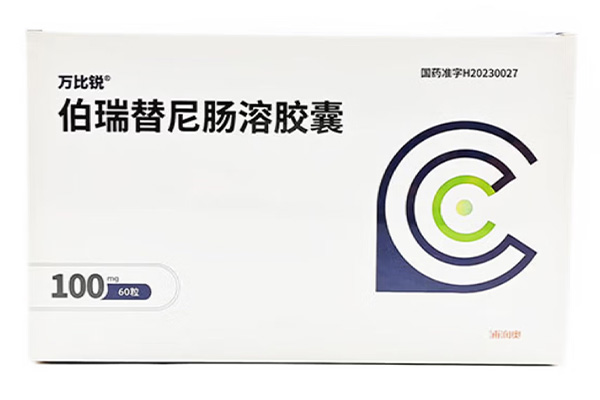
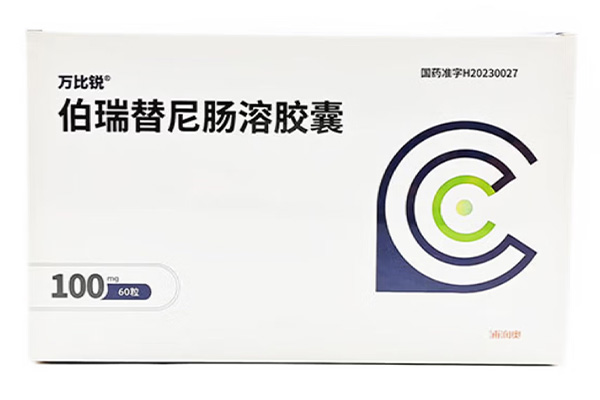
Vebreltinib Enteric Capsules is the only First-in-class targeted drug in China that simultaneously covers three indications: MET exon 14 skipping mutation, MET amplification non-small cell lung cancer, and glioma.

 AuthenticGuaranteeFast DeliveryPrivacy
 Vebreltinib Enteric Capsules were first conditionally approved for marketing by the National Medical Products Administration (NMPA) on November 16, 2023, officially launched on the market in December 2023, and the first global launch location is the Chinese mainland.
This product is indicated for the treatment of adult patients with locally advanced or metastatic non-small cell lung cancer (NSCLC) harboring mesenchymal-epithelial transition factor (MET) exon 14 skipping mutation.
This indication was granted conditional approval based on the results of a single-arm clinical trial. The full approval of this indication is contingent upon the clinical benefits demonstrated by subsequent confirmatory clinical trials.
This product should be administered under the guidance of a physician experienced in cancer treatment. Confirmation of a positive MET exon 14 skipping mutation detected by a fully validated testing method is required prior to the initiation of treatment with this product.
The recommended initial dosage is 200 mg per dose, orally twice daily (once in the morning and once in the evening), until disease progression or unacceptable toxicity occurs.
It is recommended to take this product on an empty stomach (fasting is required for at least 2 hours before administration and 30 minutes after administration; drinking water is allowed during this period).
It is advisable to take the medication at approximately the same time each day, swallow the capsule whole without chewing or crushing. Missed doses during the treatment course should not be supplemented. If vomiting occurs after drug administration, do not take an extra dose and resume the next scheduled dose as planned.
This product is contraindicated in patients with a history of severe hypersensitivity to this product or to any of its components.
This product is contraindicated in pregnant or lactating women.
Among patients receiving monotherapy with this product at a dose of ≥200 mg twice daily, the most common adverse reaction (≥20%) was peripheral edema.
21.5% of patients had treatment interrupted due to adverse reactions. Common adverse reactions (incidence ≥1%) leading to treatment interruption included: peripheral edema, increased alanine aminotransferase, increased aspartate aminotransferase, abnormal liver function, nausea, fatigue, rash, and increased lipase.
9.8% of patients required dose reduction due to adverse reactions. Common adverse reactions (incidence ≥1%) leading to dose reduction included: peripheral edema, increased alanine aminotransferase, and abnormal liver function.
6.5% of patients discontinued treatment permanently due to adverse reactions. Common adverse reactions (incidence ≥1%) leading to permanent treatment discontinuation included: increased alanine aminotransferase, increased aspartate aminotransferase, and abnormal liver function.
Contraception
Women of childbearing potential must be informed that this product may cause fetal harm. A pregnancy test should be performed to exclude pregnancy before women of childbearing potential start taking this product.
Women of childbearing potential or males whose sexual partners are women of childbearing potential must ensure effective contraception during treatment and for 3 months after the last dose.
Pregnancy
There are currently no clinical data on the use of this product in pregnant women.
Animal studies have shown that this product has embryotoxicity and fetotoxicity.
The use of this product during pregnancy is not recommended.
Lactation
It is unknown whether this product and its metabolites are excreted in human milk, and there are no data on the effects of this product on breastfed infants or milk production. Due to the potential risk to the fetus, lactating women are advised to discontinue breastfeeding during treatment with this product and for 3 months after the last dose.
Fertility
There are no clinical data on the effects of this product on fertility, so the impact of this product on male and female fertility is unknown.
There are no clinical data on the use of this product in pediatric patients and adolescents under 18 years of age.
No pharmacology, toxicology or pharmacokinetic studies have been conducted specifically in geriatric patients (aged ≥ 65 years). In clinical trials, the median age of non-small cell lung cancer (NSCLC) patients treated with this product (N=228) was 67 years. The safety profile of this product in patients aged ≥ 65 years (137 cases, 60.1%) was not significantly different from that in the overall population.
For more detailed drug information, please consult the official package leaflet.
Vebreltinib is an oral small-molecule MET inhi···...【详情】
Vebreltinib Enteric-coated Capsules is a targe···...【详情】
The recommended usual dose of vebreltinib is 2···...【详情】
vebreltinib is a targeted therapy agent for sp···...【详情】
The contraindicated populations for vebreltini···...【详情】
If any issues arise, please contact us immediately.
Email:haiousales@gmail.com
Vebreltinib is an oral small-molecule tyrosine kinase inhibitor, primarily used for the treatment of patients with advanced or metastatic non-small cell lung cancer (NSCLC) harboring MET exon 14 skipping mutation.
Vebreltinib is indicated for adult patients with locally advanced or
metastatic non-small cell lung cancer (NSCLC) confirmed by testing to carry MET
exon 14 skipping mutation.
This mutation accounts for approximately 3%–4% of lung cancer cases and belongs to a relatively rare category of driver gene mutations.
It is usually administered orally once daily. Dosage adjustments must be made strictly under the guidance of a physician.
Copyright 2024 @ haiouhealth.com All right reserved SEAGULL HEALTH


